Monday, March 3, 2008

THE HUMBLE BEE THAT IS TONY TAN


"Sir Tony! Could we have a picture with you?"

Our Franchisees' Convention program had just finished but Chowking franchisees,Managing directors and even Chowking officers stayed behind asking to have their picture taken with S' Tony Tancaktiong, Jollibee's founder and Chairman.

Several feet away,other franchisees were having their photo taken with singer-entertainer Ogie Alcasid,who was our guest speaker. Eventually,this group thinned out when Ogie left the session hall but the cluster of people surrounding S' Tony didn't. They wanted to have their picture with Mr. Jollibee himself, and S' Tony,ever the kind person he is, obliged.

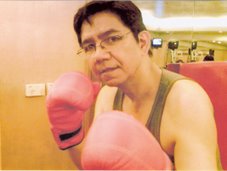
Since it had been quite a while since I had my own picture taken with TTC, I snuck up beside him when I had the chance, and my wife, Jaja, took one of us for posterity.

Anyone who has read about Jollibee's success and Tony Tan's ever growing dynasty of food chains can have the impression that he is probably unreachable,as other so-called taipans seem to be.

But S' Tony is none of that.

For me, he is an example of a person who knows where he came from,and who has not been spoiled by success. I admire him for his humble when in fact he owns bragging rights for having built a Filipino brand.

One of Jollibee's core values is "Humility to Listen and Learn." There is no better embodiment of this than S' Tony himself.

It's interesting to note that "Humility" was not listed among Jollibee's core values when in 1996, Jollibee's top management went through a review and re-defining of its core mission and values. It was one of the Tan brothers, William Tanuntiong, who insisted that "Humility" be included.

He cited an example from his own Real Estate division,where some of his people chided one of their colleagues for being arrogant. "That behavior does not belong here," they had told the erring manager,"that belongs to McDo."(referring to McDonald's)

Then his clinching argument...he said that in the first place S' Tony, the President, was modelled humility by his own behavior.

Nobody questioned that.

In fact, when I conducted the series of orientation sessions on The Jollibee Way (a Jollibee corporate culture workshop,)whenever we talked about the value of humility,someone always had a story to tell about S' Tony's humble ways.

A favorite of mine came from one of the Area Managers,Rachel Bracamonte. She told the story of how she, during one of our Franchisees conventions,had lost one of her earrings somewhere at the lobby of the hotel where we held the event. A search ensued,and she was surprised to see S' Tony on his knees helping out in looking for the missing earrings!

Others would tell of how S' Tony,when he was at a Jollibee store, would pick up litter and throw this himself into the trash bin. He also did not expect preferential treatment when he visited Jollibee stores,always queueing up with customers at the counter lines when he could very well have been served at the tables.

He did not pull rank as President when it came to management decisions. I saw this myself when I had the opportunity to sit in at Mancom sessions in 1996,when my boss, Atty. Buddy Demaisip, would be absent. When he saw merit in a VP's position he acknowledged it and was willing to change his own.

During a recent Leadership learning session here at Jollibee where he was the featured speaker,he somehow explained the reason for the humility he was so known for. He said that he believed that he did not know everything and that he can always learn from someone else.

I can't help but recall one of the beatitudes which goes: "Blessed are the meek for they shall possess the land."

It's no wonder that S' Tony's Jollibee dynasty has now expanded beyond Philippine soil to the Asia Pacific region and to the USA.

Friday, August 24, 2007

WILLIAM TAN'S EXTRA CHALLENGE!


(Cover of the Franchising brochure I made for the Taiwan exhibit)

I believe that one of the ways that Tans brought out the best in their people is that they gave them challenging tasks, and recognized a good job when they saw it.

I experienced this first hand when I was given an assignment by then head of International Operations S' William Tan Untiong (WTU, as he was more popularly known.)

There was to be an expo of fastfoods and restaurants in Taiwan and he wanted Jollibee to be represented there. Jollibee had just opened its first store there in 1987 and he thought that by making the brand visible, we would have some prospective franchisees that would help grow the chain there.

It was Jimmy Enriquez,the point person for our Taiwan operations, who told me of the assignment. What WTU wanted me to do was to come up with a brochure about Jollibee that they would distribute during the expo. What made this extra challenging though was that I had less than a month to finish the brochure.

I had some prior experience doing this kind of work so that was not a problem. The short deadline however, presented complications and limitations.

For one, it would be impossible to have any color printing done since no printer then would accept a job order for color separations less than three weeks. The other concern was that it was only days before Holy Week when I got the assignment. That meant that the printing presses would be closed for a week,leaving me a window of only two weeks tops, to get the brochure out.

Fortunately, I had worked with a printing press that was willing to take on the job, but they told me that the brochure had to be in black and white. I informed WTU about it and since it was a no choice situation, he gave the go ahead.

I sat down with the layout editor of the press and drew up a schedule of when I should submit the dummy layouts, when I should get the blueprint and when they would get the final document out.

I couldn't take any new pictures so the week before Holy Week I already started looking for photos from existing file photos. As I found the pictures, I composed in my mind what the brochure would look like.

During the Holy Week I worked on the contents of the material, writing the copy and creating a layout. There were details and information that were missing so Jimmy and his then girlfriend, Meann San Juan, paid me a visit at home just to give me the data I needed.

The Holy Week break gave me enough time to complete the layouts such that by the Monday of the following week I was at the printer's submitting my dummy layout and all the needed photos.

I kept WTU posted on the status of the project. The only possible hitch we anticipated was that the brochures would be finished a day before he had to fly back to Taiwan to attend the expo.

Thankfully, the printer completed the job as promised. However, that meant I had to wait till about 6 PM at Culmat building for the delivery.

I received the glossy black and white brochures and then drove over to WTU's residence somewhere in Cubao to deliver the copies. I kept one for myself as a souvenir.

WTU greatly appreciated the effort and really wished we had had more time to come up with a color printed material. But he said, that it had come out better than he expected considering the short lead time.

He wrote a letter of appreciation to my boss commending me for what I had done, which really made me feel good!

Tuesday, August 14, 2007

THE DAY I REVERSED THE EVP'S DECISION

This is a favorite story of mine. For me it illustrates how Tans believed and trusted in their people's good judgment.

This happened sometime in December of 1986 when I was preparing for the first ever Managers' Convention of Jollibee,which was to be held in January,1987.

I got a call one afternoon and when I picked it up and said the customary greeting I recognized the familiar voice at the other end. It was S' Tony Tan. And he wanted to get my idea about something related to the convention.

We who were in the committee had agreed to give all participants a custom made jacket as a souvenir. S' Ato,who was head of the project, suggested that we have the Convention logo embazoned at the back of the jacket so that when the managers wore it they would be constantly reminded of our convention theme ("No. 1 Again in '87'.)

What S' Tony wanted was my opinion on where to put the logo. He said,"Ato told me that you plan to put the Convention logo at the back of the jacket. What do you think?"

"What do I think?" I couldn't believe my ears! Here was the President of the company consulting me about a simple matter! He wanted my opinion so I gave it to him.

I told him that when we had met about the matter, it was S' Ato who recommended the placement of the logo at the back. (I made it very clear that it was his brother's choice.)
But if I had my way, I told him, I'd much rather put a small version of the logo in front, at the left side. My reason for that was the jacket looked elegant and having a big logo printed at the back would "cheapen" the look. (But of course, I didn't tell him that.)

After I said my piece,he simply said,"I think so too."Meaning he agreed with my idea about the logo! Then he said thanks and hung up!

I was quite concerned after that because it might appear that I had disagreed with S' Ato's point of view. But at the same time I felt a sense of elation, simple because I had been consulted by the President and had given him my 2 cents!

When the jackets came out,the logo was printed the way I had suggested it..and it really looked great!

I never heard any negative reactions from S' Ato about my "reversal" of his decision, and that is what I admired about the owners and the company.

I would be consulted about many more things during my long stay at Jollibee, but I will always remember the day I reversed S' Ato's decision!

Sunday, August 12, 2007

A CASE FOR CRASH TRAINING

I have always been against crash training, specially after having experienced its ill effects while I was still at KFC.

Shortening a training program to its bare essentials and expecting that trainees will be equipped with necessary skills to do the job is really expecting too much of the trainees...and usually ends up as the name suggests, in a "crash."

However, in 1987 I had to agree to launching a "crash training" of our BOTP (Basic Operations Training Program) not only for one, but two, batches of management trainees.

This happened because all of a sudden we had to open three Jollibee stores in two months and there were still no managers ready to run those new stores. Since our regular BOTP ran for one and a half months, we needed to crash the program down to two weeks, after which the trainees would be deployed to their store assignments.

In a crash training situation it is important that the trainers are top caliber instructors and it is also imperative that the trainees' progress is closely monitored. To meet these requirements we required our Training specialists (who were former store managers themselves)to personally handle the training of the management trainess who would go through the crash program.

With the shortened time also we had to do training differently.

We requested that the two best training stores at the time be given to us as venues for training. We converted part of the dining areas of these stores into classrooms where the trainees would undergo lectures on store procedures. After their lectures they would go to the stations and practice what they learned.

To make sure that the trainees themselves were prepared for fast paced learning we made sure to tell them they were going through a special program.

For almost a month, I had no one with me at the office because all my trainers were in the training stores. I visited them occasionally to find out how things were going.

It was physically taxing for my team then because they not only had to teach but also work during operations,coaching the trainees. The trainees too felt overwhelmed by the overload of information they were getting,but they felt challenged, so they gave their best.

Did we succeed after all?

In so far as filling up the new stores with managers, yes, we were able to do that. The "crash trainees" had enough experience to get them through the opening of their stores. But over the long haul, we felt that we failed.

Many of those who joined the crash training resigned within a year. There were survivors but they only did so because of personal tenacity.

We never ventured into crash training the BOTP after that.Things were planned better so that before a new store opened, its managers would have received ample training.

Thursday, July 26, 2007

MY FIRST TASTE OF FRUGALITY AT JOLLIBEE

One of Jollibee's core values is FRUGALITY.

To the filosofos,this would probably give the impression that Jollibee espouses stinginess or being miserly when it comes to money. But in my experience it was really a mindset that the Tans wanted to create in their employees specially when Jollibee was still struggling during its early years.

My first taste of this was when I attended a meeting of the Operations department which was called by then Operations Manager S' Ato. In the two previous companies I worked with, when we had meetings that extended beyond an hour it was customary to provide merienda or snacks to tide us over till lunch. The snacks would usually be sandwiches and coffee or softdrinks.

During that meeting, I got the surprise (or shock) of my life when we were served a pack of Skyflakes each and water! Not even softdrinks!

How was it possible that the leading fastfood chain in the country couldn't even afford a more substantial fare for its key people?

On hindsight I now realize that it was probably because of such spartan-like practices that Jollibee kept itself profitable through its early years.

When Jollibee grew bigger and ascertained its position as undisputed fastfood leader in the country,the ruling on the food we served during merienda and during meals was relaxed a bit.

I experienced this first hand in1991, when I organized and coordinated a Strategic Management seminar for Mancom members and department managers. The session was held at one of the Training rooms of DAP, Pasig, and just across our seminar room was a training program being conducted for a group from San Miguel Corporation.

When I arranged for the food for that seminar I saw to it that we just got the cheaper variety of snacks on the menu. This was in keeping with our culture of being frugal I told myself.

But during that seminar something happened which changed all that.

S' Ato happened to look at the snacks that were being served to the San Miguel participants and he noticed that they had two types of food served to them. Whereas we had only sandwiches and a softdrink, the San Miguel group had sandwiches, pancit and softdrinks.

Compared to theirs, our snacks looked pitiful.

S' Ato got an insight that afternoon. He told me later that for our image as the leader in the industry, it didn't look good that we were eating "cheap"food. So he instructed me to order a more substantial menu for the next day, not only for merienda but even for lunch!

That was a breakthrough, if there ever was one.

From that time on,whenever we served food during training sessions we did not scrimp any more, but we also didn't go overboard. Frugality was still the order of the day...but now it would be observed not at the expense of corporate image.


Sunday, April 29, 2007

BEATING McDONALD'S at CUSTOMER SERVICE


THE SITUATION

I will always remember 1987,among other things, as the year we started beating McDonald's in customer service.

It all started one morning when my boss, Abelle Carlos, called me into her office for a meeting. She had just met with our then Operations head, S' Ato Tanmantiong,who had shown her the results of surveys made by two independent research groups,Pulse and the PSRC. The studies compared how well Jollibee and McDonald's delivered in the basic areas of Food, Service and Cleanliness. The respondents were loyal customers of Jollibee and McDonald's.

In the areas of Food and Cleanliness, we were perceived to be better if not at par with our U.S. rival. We even had an edge in food because the respondents remarked that McDonald's food was bland.

In the area of Service, however, McDonald's clearly had a distinct advantage. Both Jollibee and McDonald's patrons basically said:"McDonald's service is faster,friendlier and in general, better than Jollibee."

S' Ato wanted instructed Abelle to launch a project that would correct the situation. Due to the urgency of the matter we had only one month to get the project going.

It would have been easy to come up with a solution if our problem with service was merely a training concern. But it wasn't!

As our customers pointed out,what they didn't like with our service were the following:

1. Our customer lines (or queues) were long and slow-moving.
2. It took us a long time to serve their food.
3. Our counter persons didn't look as smart and didn't move as fast as the McDonald's service crews.
4. Our crews were also not as friendly as their McD counterparts.

Analyzing our situation, we realized that we had recruitment issues, operating systems problems and training-related concerns all contributing to our service problem.

The recruitment concern was easily solved when we decided to upgrade the profile of our service crews. In hiring our counter and dining crews we didn't settle for applicants who just wanted a job. We got those who looked smart and pleasant. To attract better candidates, we also made the pay competitive.

The more challenging problems were systemic. Some of the factors that made our lines long and service slow were built into our way of serving our customers. But we didn't realize that until we started observing what the competition was doing.

For example, at Jollibee we still had guard rails which were supposed to keep customers in line. McDonald's didn't have any of these and yet their lines were more organized and were moving faster. Ours tended to be long and slow moving and not always organized.

We learned later on that McDonald's solution was simpler. They trained their cashiers to direct customers where the lines were to be. And since they weren't restricted by guard rails they could create more customer lines as they needed thus speeding up the movement of the queues!
Another example was our practice of validating order slips(which McDonald's didn't have.) Each order slip had to be inserted into a slot at the cash register to be tagged as served. The procedure took about an average of 4 seconds. However, this would take longer if the machine jammed or it was difficult to insert the slip into the slot.

When we reexamined why we were doing this procedure we realized it could be removed without any major consequence. By removing this step we could speed up transactions and keep the lines moving!

Another thing we learned from McDonald's was that their managers actively made things happen. They were managing service. Our managers, on the other hand,tended to just watch the lines build up and not do anything about moving the lines. We found out later on that one reason they did so was they thought the long lines were a SIGN that sales were good! What thye didn't realize was that there were customers who left the store because they couldn't wait in line too long!

OUR SOLUTION:

Working together with our Systems department, we came up with a program which we called Managing Service. This was a two day training program where we taught our managers the new systems and procedures in serving our customers. We started our roll-out by training all our Regional Managers and Area Managers first.

I was always fond of adding drama to our sessions so for our opening I had our mascot Champ come in and punch some "effigies" which represented "Slow Service,""Long Lines,""Unfriendly Service."

The training itself was "packed" with a lot of content and exercises. During those days,pulling managers away from the stores was a luxury we couldn't afford, so we had to cram a lot in the two days.

We taught our managers how to "Break the Line" and "Move the Line. " These were procedures for keeping the customer queues short and moving. Hand in hand with this we emphasized to them that long lines were a bad sign that somehow there would be disgruntled customers who would leave the store if they waited in line too long.

We also introduced the tool called the "Break List." This was a form where the managers plotted when they were supposed to give the counter persons their 15 or 30 minute breaks.

The problem before was that the break schedules were posted on the stores' bulletin board every morning. The first thing that crew members would do was to check their scheduled break before manning their posts. Then when time came for their break the crews would notify their supervisor then just leave their post. The supervisor with really no choice in the matter allowed them to leave even if there were many customers in line.

With the introduction of the "Break List," the crews could not leave their posts unless their supervisor told them so.

To train our managers to pick up the pace we did a simulation where managers had to be able serve customers in line under time pressure. We played fast music and shouted"Hustle!Hustle!" as the role players tried to beat the clock.

As a fitting and symbolic ending to the training program, we had our participants write down on easel sheets their commitments to improve service levels in their respective stores. We then rolled this up to form something like a bat. With this they swatted at effigies that stood for the enemies of Good Service ( Slow service, Long lines etc.),symbolizing their concerted effort to beat our service problems.

THE AFTERMATH

The Managing Service Program was one of the first major system changes we rolled out at Jollibee. For the next three months after July,1987, our store managers trained their crews on the procedures we taught them.

The changes were noticeable even within the first month of the rollout. For one, with the guard rails gone,our lobbies looked a little more spacious. The customer queues started to move faster and one noticed a little more hustle at the counters.

To encourage more speed, the 60 Seconds and 40 Seconds Clubs for cashiers and counter persons were established. Only those counter crews who could handle transactions and serve customers within 40 seconds and 60 seconds made it to this elite group. They were recognized by being given pins and certificates by their store managers.

Of course, we at Jollibee noticed the difference in the way we were serving our customers,but the question was, did our customers notice it too?

The answer came when at the start of 1988, we commissioned Pulse and PSRC to do another comparative survey similar to what they did in 1987.

This time the results were different.

While we still had the edge in food versus our competitor,what was significant this time was that in the area of service we were now perceived to be at par, and sometimes even better than McDonald's.

Though there were still remarks about slow service, it wasn't as glaring as before. Where we fared better than McDonald's was in customer relations. Our crews were perceived to be more respectful ("magalang") than their counterparts. Our move also to allow crews to greet customers in the vernacular ("Magandang umaga/hapon po") also proved to be a big hit with our customers.

We had scored a major victory! We learned from the experience that we could make chainwide changes in our operating systems fast.

The Managing Service rollout made us more confident and strengthened our belief that we could definitely beat our rival!

Thursday, April 12, 2007

JOLLIBEE'S CULTURE OF RESPECT

One of the peculiarities of the Jollibee culture that I noticed when I first joined the company was its strange way of using the title "Sir" or "Ma'am."

Having worked in organizations where I was used to being called by my first name, I felt uneasy being called Sir Ted,not only by people lower than me in rank, but also by my peers and even by my superiors!


Oh yes, even the owners themselves would sometimes refer to me as S' Ted if I was being referrred to in the third person in front of everybody else.

I was curious as to the origin of this practice so I asked "Sir Ato,"our Executive Vice-President and one of the Tan brothers,about it.

He said that in the early days of Jollibee,they started promoting employees from the ranks to supervisory positions as the company grew. They noticed though that these newly promoted supervisors did not seem to get the respect of their former peers.

To get around this problem,the Tans themselves decided to start addressing these new supervisors as "Sirs" or "Ma'ams," even though they were technically their subordinates. When the members of the rank and file noticed the owners setting an example, they somehow felt ashamed about doing otherwise. From that time on the supervisors were given the respect they deserved.

The practice has stuck up to now, and is one of the trademarks of the Jollibee way. It may seem funny or strange for some,but once they realize that it is one way by which the Tans fostered a culture of respect in the organization,then the smirks are immediately replaced by nods of appreciation.